
Watching & Rules
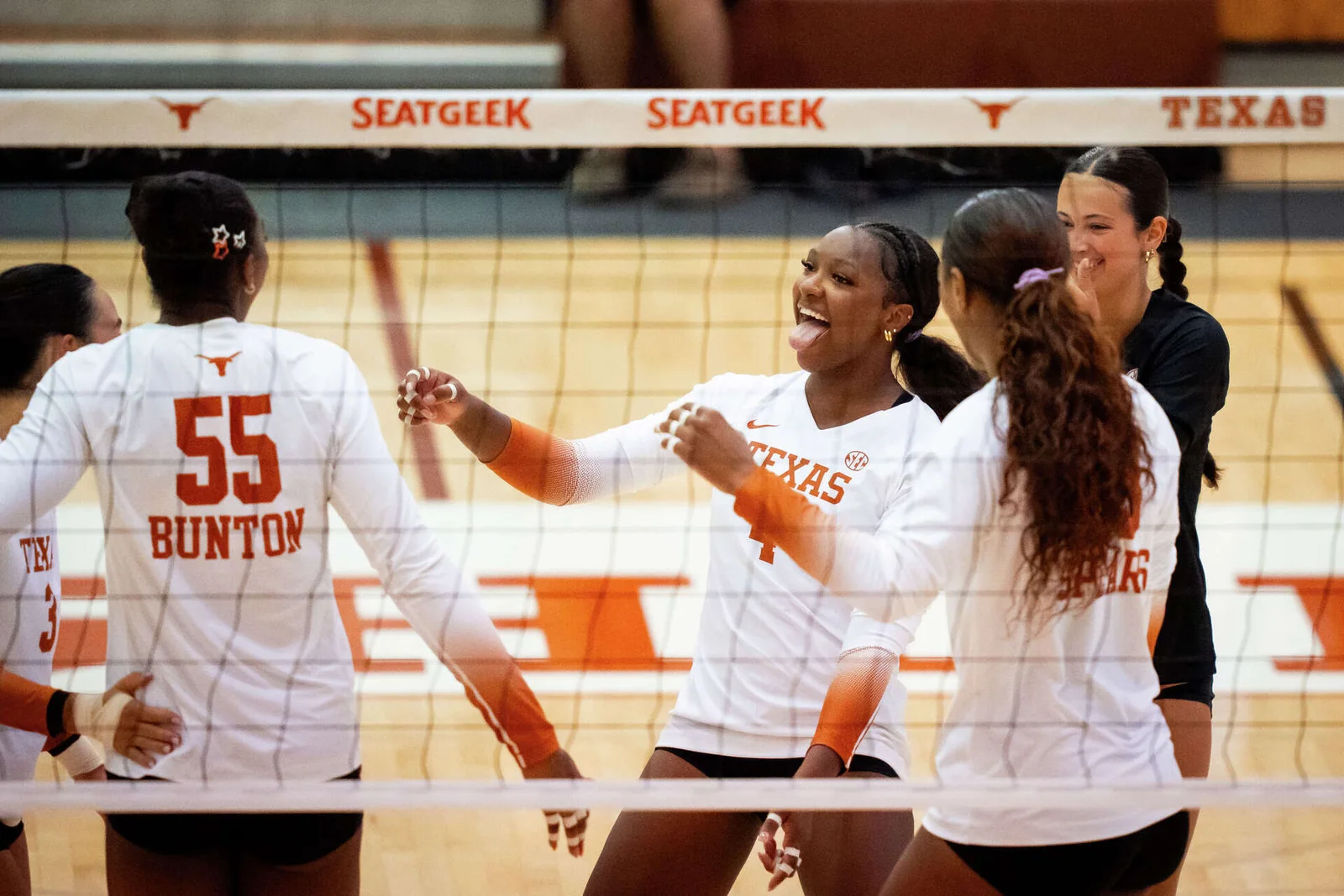
The quickest way to understand Texas volleyball is to stop following only the ball. Look at the players preparing for the next contact: a passer adjusting her feet, a middle beginning an approach, a setter checking the block and a defender moving behind the hitter. Their jobs explain why one attack feels effortless and another becomes a difficult rescue.
You do not need to memorize the entire lineup before enjoying a match. Start with the Texas volleyball roster, choose two or three jersey numbers and connect those players with their responsibilities. A roster label describes a role; it does not mean the athlete stands in one spot all night. This guide explains the main positions and the small details that make each one worth watching.
Separate a player’s job from a court position
A team fields six players, arranged through a service order that moves them between front-row and back-row positions. The specialist jobs exist within that rotating structure. An outside hitter can be in the back row, and a setter can approach the net from a back-row starting place. Those descriptions are not contradictions.
Think of the court position as a player's current place in the rotation and the roster position as the work she is usually asked to do. After the serve is contacted, players move toward the areas where their skills serve the team best. That movement can make the formation look very different from the initial alignment.
Substitutions and libero replacements add another layer. Two players may perform different parts of the work associated with one rotational place. When you see a new athlete enter, first ask whom she replaced and which row the team is in. That is more informative than assuming the coach has changed the entire system because one jersey number disappeared.
The setter organizes the choices
The setter usually plays the second contact and distributes the ball to an attacker. Her job begins before that touch. She reads the first pass, moves to meet it and judges which options remain realistic. A pass close to the intended setting area gives her more freedom than one that pulls her toward the sideline.
Watch the setter's feet and direction of travel. If she arrives balanced with several hitters approaching, the opposing block has more decisions to make. If she is chasing a difficult first contact, a high set to the outside may be the practical solution. A predictable set is not always a poor choice; sometimes it is the best recovery available.
Setters also defend, serve and sometimes attack. Do not evaluate one only by whether every set produces a kill. The hitter, pass quality and opposing defense affect that outcome. A useful viewing exercise is to watch whether the setter turns a difficult ball into an attack that keeps Texas in the rally rather than expecting a perfect scoring chance every time.
Outside hitters balance scoring with first-contact work
Outside hitters commonly attack from the left side, although their responsibilities can extend across several phases. A player in that role may pass a serve, recover into an attacking approach, swing against a formed block and then prepare to defend the opponent's return. It is demanding work even when only the final swing appears in a highlight.
Notice what happens after an outside hitter receives the serve. Does she still get enough time and space for a useful approach? Is the set high enough to accommodate her recovery? A server may target a hitter to interfere with that transition, so an ordinary-looking pass can be part of a larger tactical exchange.
A difficult outside swing also needs context. If the first contact leaves only one realistic attacking option, the defense can concentrate its block there. The hitter might choose a deep shot, a controlled roll or contact off the block rather than attempt an impossible clean winner. Those choices can be valuable even when they do not immediately add a kill to the season statistics.
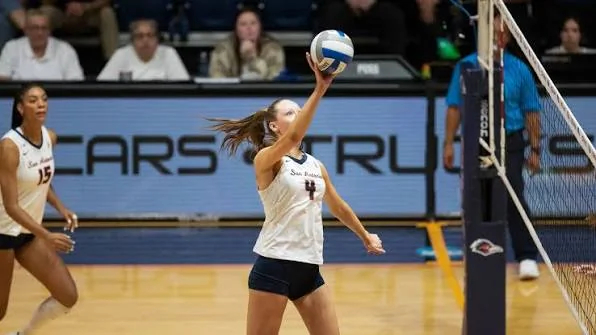
Middles create opportunities before they touch the ball
Middle blockers are central to the attack and the defense. On offense they often threaten a quick set close to the setter. On defense they read the opponent and move to help form a block. The movement between those jobs can happen in a fraction of the time a television replay spends on the final hit.
A middle's approach can influence a rally without producing a set. If an opposing blocker respects the quick threat, she may hesitate before helping on the pin. That can give another hitter a better chance. As a spectator, look for the middle staying available when the first pass allows it rather than measuring involvement only by touches.
For blocking, watch the distance the middle has to travel and whether she arrives beside the outside blocker with a coherent shape. A block that slows a ball can help the floor defense even when it is not a stuff block. The visible point may belong to a teammate several contacts later, but the middle helped create the manageable transition.
Opposites connect right-side attacking and blocking
The opposite, also called a right-side hitter, is another major attacking option. The name often reflects the player's relationship to the setter in the lineup. At the net, the opposite can present a right-side threat and help defend against the opponent's left-side attack. The precise workload depends on the lineup and coaching choices.
On a good pass, compare the routes available to the setter. A right-side option can stretch the opposing block across the net. When the first pass is poor, that option may become harder to use. Watching whether the opposite is available helps explain the distribution even if the setter chooses somebody else.
Do not assume an opposite never passes or never plays defense. Systems and personnel differ. Look at the actual alignment rather than importing a rigid diagram from another team. The roster gives you a starting label; the match shows how Texas is using that player in a particular rotation and against a particular opponent.
The libero makes the next attack possible
The libero wears a clearly contrasting jersey and specializes in back-row work. Serve reception, digging and organizing the floor defense are the most visible parts of the role. A controlled first contact can preserve several attacking options; a hard-driven dig that stays playable can give the team a second chance at a point.
NCAA rules restrict the libero's attacking and blocking actions. They also allow libero service in one rotational position, which is an important difference from some international descriptions of the role. Teams may designate two liberos for a set, but only one may be on court during a rally. If you see two contrasting jerseys on the roster, that does not mean both defend together.
Watch the quality of the ball after contact. A spectacular dive that barely preserves the rally has value, but a quiet pass that lets the setter run the full offense may be equally important. The libero's work is often easiest to appreciate when you follow the next two touches rather than stopping your assessment at the dig itself.
Defensive specialists and serving substitutes have focused jobs
A defensive specialist may enter through an ordinary substitution to strengthen passing or defense. Unlike a libero replacement, that entry uses the team's substitution procedures. The athlete generally wears the same team uniform as her teammates, so the jersey color alone will not identify the defensive role.
A serving substitute has a different immediate task: deliver a useful serve and participate in the rally that follows. Pressure does not require an ace. A serve that moves a receiver, disrupts a hitter's approach or limits the setter's choices can help create a later scoring chance. The risk and reward depend on the situation, rather than one universal rule that every serve must be aggressive.
Give these entries a full sequence before judging them. Watch the serve, the team's block positioning and the defense behind it. A substitute's contribution may be concentrated in only a few rallies, but those rallies can show a clear plan. The official match box scores linked from the results page help confirm who appeared when a fast substitution is difficult to catch.
Look for systems without forcing every lineup into one
You may hear commentators describe a 5–1 or a 6–2. Broadly, those terms describe how setting responsibilities and attacking options are organized. A 5–1 uses one primary setter through the rotations. A 6–2 commonly uses setting from the back row while maintaining three front-row attacking options, often with coordinated substitutions.
The useful viewing question is which setter is active and where she is in the rotation. That tells you more than repeating the system's name. Do not infer Texas's current system solely from a roster containing several setters. Coaches can adjust combinations, and a lineup label should reflect what is actually happening on the court.
Before the next broadcast, use the TV schedule to find the match, then keep the roster nearby for the opening few points. Follow the pass, the setter's options and the hitter's approach. Once those connections become familiar, each specialist role starts to fit into one coordinated team effort.
A practical way to learn without missing the rally
Choose one phase for a set instead of trying to analyze everything. In the first set, watch the first contact. In the next, notice the setter's movement. Later, follow a middle's blocking route or a defender's starting depth. This makes your attention more purposeful while leaving room to enjoy the pace and emotion of the match.
After the final, compare your observations with the available numbers and the next opponent on the Texas volleyball schedule. You may discover that a player with modest scoring totals repeatedly kept the offense functional. Learning the positions makes those contributions visible. The ball still draws your eye, but you begin to recognize the decisions around it that make the next contact possible.